I was standing in front of the mirror holding my stomach with both hands.
Not because I was pregnant.
Because I still looked like I was.
My youngest child was already four years old.
Four.
Yet every time I wore a fitted dress, my belly pushed forward like it wanted to announce itself before I entered the room.
You know that quiet pain, don’t you?
The one that comes when someone laughs and says, “Madam, another baby is coming?”
You laugh too.
But inside, you are thinking, “Please, let this ground just open and swallow me.”
You have bought waist trainers that made breathing feel like punishment.
You have tried slimming teas that sent you to the toilet but did not change the real problem.
You have saved gym workout videos you never finished because motherhood does not give you two free hours every morning.
And the worst part is not even the belly.
The worst part is how it makes you feel when your husband looks at you.
Does he still find me attractive?
Does he miss my old body?
Am I now just mummy?
If you have ever asked yourself those questions quietly, this story is for you.
Read it slowly.
Because what I discovered later made me realise I had been fighting the wrong battle.
This method was not loud.
It did not come in a shiny bottle.
It was not sold to me by a slim Instagram vendor shouting “flat tummy in 7 days.”
It came from a retired midwife who had spent decades watching mothers punish their bodies when what they really needed was recovery.
Hi, my name is Chioma Eze.
I’m not a doctor.
I’m not a fitness coach.
I’m not one of those women who had one baby and immediately “snapped back” like nothing happened.
I am a regular Nigerian mother of three who spent years hiding her stomach under loose clothes, waist trainers, wrappers, and fake smiles.
The Part Of Motherhood Nobody Warned Me About
After my first child, my body changed. I expected that.
Pregnancy is not beans.
But after some months, my belly went down enough for me to feel like myself again.
After my second child, it was harder.
The belly stayed longer. My clothes took longer to fit.
Then my third child came.
And everything changed.
Months passed. One year passed. Two years passed. Then three.
My youngest child started talking properly. Running around the house. Asking for biscuits. Calling me “Mummy, see!” every five minutes.
But my belly was still there.
It pushed out.
Some days it looked worse in the evening. Some days, even when I had not eaten much, my stomach still came forward.
And because the rest of my body was not as big, it made the belly even more obvious.
I started dressing around my stomach.
Not dressing for beauty.
Dressing for hiding.
What I Had Tried Before
I had tried waist trainers.
They made me look smaller for a few hours, but the moment I removed them, reality returned.
I had tried slimming teas.
They made me use the toilet, feel weak, and think something was happening. But after a few days, nothing real had changed.
I had tried belly wraps.
They may have helped immediately after childbirth, but years later they were just another layer of hiding.
I had tried random YouTube workouts.
Some were too intense. Some made my lower back hurt. Some made my stomach push out strangely when I tried to do crunches.
I had tried skipping meals.
That only made me angry, tired, and more likely to eat too much later.
I even paid for a gym membership once.
I went for two weeks.
Then real life happened.
School runs. Work. Cooking. Church programs. Tiredness. Children needing everything at once.
The gym card stayed in my bag like evidence of another failed attempt.
How I Finally Found The Solution
A few months later, I travelled to my village for a burial.
That was where I met Mama Adanne.
Mama Adanne was 68 years old. A retired midwife. She had helped women deliver babies for more than thirty years.
One evening after food, some women sat outside talking.
Somebody mentioned childbirth.
Another woman joked about how her last born had “collected her shape.”
Everybody laughed.
I laughed too.
Then Mama Adanne looked at me and said, “You too, your stomach is worrying you.”
I froze.
I said, “Mama, how did you know?”
She smiled.
“A woman who is hiding her stomach does not sit freely.”
That sentence almost made me cry.
Later that night, I went to meet her privately.
I told her everything.
She listened without interrupting.
Then she shook her head and said, “Leave all these teas and tight belts. They are making you chase the wrong thing.”
I asked, “Then what is the right thing?”
She said, “Wake the core. Correct the posture. Calm the stomach. Then rebuild the woman.”
That became the foundation.
No waist trainer. No slimming tea. No gym pressure. No starvation. No surgery dreams.
Just a simple structure.
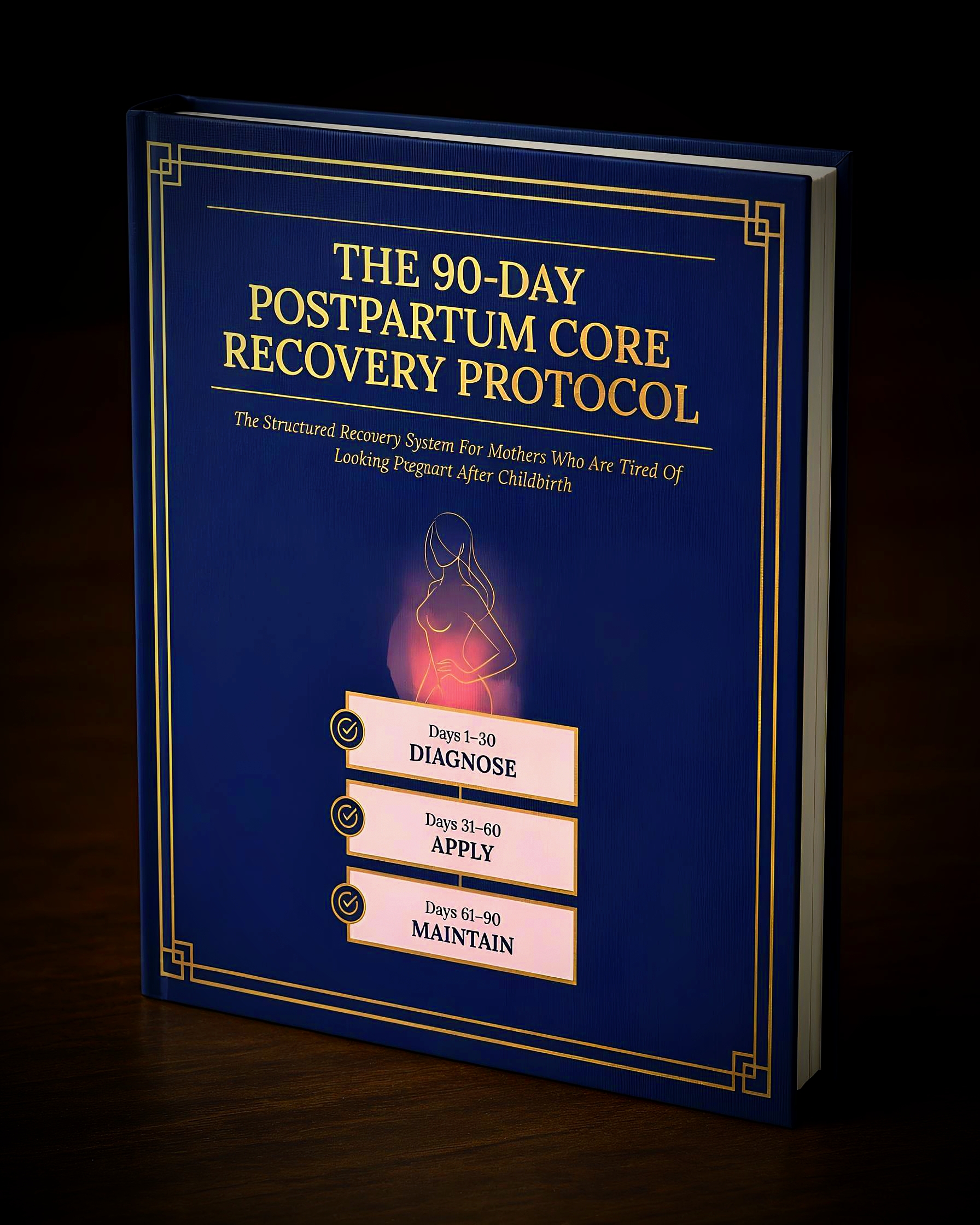
A morning core routine. Walking. A better plate. Bloating checks. Posture resets. Stress control. Sleep support. Confidence rebuilding.
When I Knew Something Was Changing
When I returned to Abuja, I started.
The first few days, I felt foolish.
Deep breathing? Gentle core activation? Walking? Standing properly?
It felt too ordinary.
Day 1, nothing happened.
Day 2, nothing dramatic happened.
Day 3, I nearly told myself, “This one too will not work.”
But I continued because for once, I was not harming my body.
I was not squeezing it.
I was not starving it.
I was not insulting it.
By the second week, I noticed something.
My stomach did not feel as heavy in the evenings.
I became aware of how I was standing.
I noticed certain foods made me bloat more.
I stopped pushing myself into exercises that made my belly dome out.
By the fourth week, one skirt I had abandoned zipped without a fight.
I stood in front of the mirror and cried.
Not because everything had disappeared overnight.
But because for the first time in years, I felt like I understood my body.
The real test came on a Saturday morning.
I wore a fitted top I had avoided for almost two years.
My husband looked at me and paused.
He said, “Wait... what are you doing differently?”
Then he came closer and said, “You look lighter. But not just body. You look happy again.”
That statement touched me more than any compliment about my shape.